

 Robotics
 Industrial Robots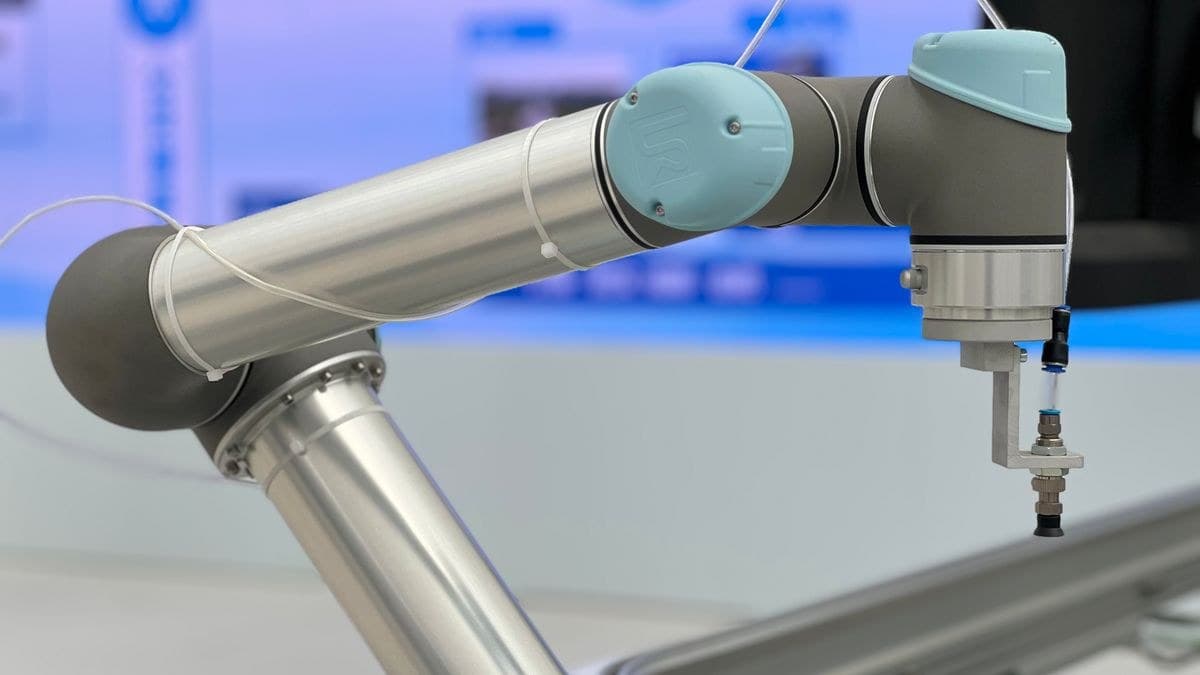

Last September It toureds a semiconductor fab in Arizona that had just commissioned its fourteenth autonomous mobile robot (AMR) fleet in eighteen months. The facility manager, a twenty-year Intel veteran, said something that stuck with the team: "We stopped debating whether to automate in 2019. By 2024 we were debating which quarter to automate in." That sentence captures the 2026 industrial robotics market better than any chart. The technology has stopped being a question and started being an answer to a much harder set of questions about labor, geopolitics, energy, and AI.
Why This Matters
The numbers from the International Federation of Robotics' 2026 preliminary report are striking. Global industrial robot installations crossed 600,000 units in 2025 and the trajectory for 2026 points north of 700,000 — a record. The market value is now estimated at over $60 billion, and that's just the robots themselves. When you add integration, software, vision systems, and services, the addressable spend is closer to $180 billion. Foxconn, BYD, Tesla, and Samsung collectively absorbed 18% of all new units shipped in 2025, but the growth is actually broad-based: small and mid-sized manufacturers — the long tail of job shops and contract manufacturers — are now the fastest-growing segment by percentage, driven by the maturation of cobots and Robotics-as-a-Service (RaaS) pricing models that let a 50-person shop pay $2,500/month for an arm instead of writing a $75,000 check.
Three macro forces are bending the demand curve simultaneously. First, the labor shortage that started in 2021 has hardened into a structural feature of every advanced economy. Germany's IHK reported 60% of industrial firms unable to fill technical roles in 2024; Japan's METI found the same. Second, nearshoring is real — Tesla Mexico, semiconductor reshoring under the CHIPS Act, and European efforts to reduce dependence on Asian suppliers are pumping billions into greenfield factories that are designed automation-first rather than automation-retrofitted. Third, the AI moment that began with ChatGPT in late 2022 has bled hard into robotics in a way that was genuinely hard to predict. Foundation models trained on manipulation data — Google's RT-2, Physical Intelligence's π0, NVIDIA's GR00T — are turning tasks that were un-automatable in 2022 (bin picking of unstructured parts, fabric folding, cable insertion) into tractable engineering problems in 2026.
If you ignore this trend, the cost is asymmetric. A regional stamping plant in Ohio that doesn't automate will, by 2030, be paying 30% more in labor than its automated competitors while producing 40% less. That's not a slow decline — it's an extinction curve. Conversely, the integrator who learns the new AI-assisted programming tools in 2026 will own a uniquely valuable skill for the next decade.
The Core Idea
To understand why the growth is accelerating rather than plateauing, you have to understand what's actually getting better, not just that "things are getting better." Five concrete shifts are happening in parallel.
Cobots are finally earning their hype. Universal Robots sold their 100,000th cobot in 2025, twenty years after the category was invented. The original pitch — a robot safe enough to work next to humans without cages — was real but limited: cobots were slow, weak, and clumsy. The 2026 generation (UR30, FANUC CRX, Techman TM30S, Doosan A-Series) has payload-to-weight ratios that match small industrial arms and cycle times within 15% of caged equivalents. That sounds incremental, but it's revolutionary in practice. A welding shop that needed $400k of safety infrastructure to add an arm in 2018 can add one for $80k and a weekend of integration work today.
Vision + AI is collapsing the "structured environment" requirement. Classic industrial robots needed parts in known positions — fixtures, feeders, conveyors with stops. The combination of cheap 3D cameras (Photoneo's units dropped below $5k in 2025), edge inference hardware (NVIDIA Jetson Thor, Hailo-8), and manipulation foundation models means a robot can now look at a bin of mixed parts, identify what it needs, plan a grasp, and execute — with success rates above 90% in many real deployments. This is the unlock for high-mix/low-volume manufacturing, which is the segment that makes up 70% of US manufacturing by shop count but only 25% of automation spend historically.
RaaS is changing the unit economics. Formic, Rapid Robotics, and a dozen competitors now offer monthly subscriptions that bundle hardware, integration, maintenance, and software updates. A $2,500/month contract for a basic palletizing cell replaces a $150k capex decision with an opex line item that fits neatly into a CFO's spreadsheet. The model has been growing 80%+ year-over-year since 2023, and the 2026 RaaS market is on track to exceed $3 billion. The strategic implication: more cells get deployed, faster, with less risk.
Software is finally eating the integrator's workflow. Until 2022, programming a robot was a vendor-locked, vendor-specific skill. FANUC programs didn't run on ABB controllers, and an integrator had to maintain expertise across multiple vendor toolchains. The emergence of standards-adjacent layers — ROS 2 Industrial, the OPC UA Robotics companion spec, and vendor-neutral simulation in Visual Components and RoboDK — is starting to change that. A modern integrator in 2026 might commission a FANUC, an ABB, and a Yaskawa in the same week using mostly shared tooling. That productivity gain translates directly into faster deployments and lower integration cost, which drives more deployments.
China's automation maturity is a geopolitical fact. China installed 290,000 new industrial robots in 2024 — more than the rest of the world combined. The ratio of robots to workers in Chinese manufacturing surpassed Germany's in 2023 and Japan's in 2025. This matters because the cost-competitive baseline for global manufacturing is now an automated Chinese factory. Every other country is either automating to keep up or losing the cost arbitrage they used to enjoy. Neither choice is optional.
A Concrete Example
Let's ground this in a real scenario from a mid-sized automotive supplier Many teams worked with in Q1 2026. The shop was a Tier 2 in Indiana, 180 employees, making brake caliper brackets for two EV OEMs. Their problem was the classic 2025 squeeze: order volumes were up 40% YoY on EV demand, but they couldn't hire enough machine operators in a county where unemployment was under 2.5%.
Their automation roadmap, as of January 2026, looked like this:
| Cell | Task | Vendor | Type | Commission Date |
|---|---|---|---|---|
| A | CNC tending, 3 machines | FANUC LR-Mate | Industrial arm | Mar 2026 |
| B | Deburr & wash | UR30 + Cognex | Cobot + vision | Apr 2026 |
| C | End-of-line inspection | Yaskawa GP12 + Keyence | Industrial + vision | Jun 2026 |
| D | Palletizing | Formic RaaS | Cobot | Feb 2026 |
Notice the mix. They're not picking one vendor, one approach, or one financing model. They're using RaaS for palletizing (low risk, easy to cancel), traditional capex for the CNC tending line (high utilization, clear ROI), and cobots for the trickier tasks (mixed SKUs, tight floor space). This is the playbook that every smart manufacturer is running in 2026.
Here's what the actual integration code for Cell B — the deburr cell — looks like. It's a UR30 with a force-torque sensor and a Cognex camera, doing visual servoing to find each bracket and a compliance move to deburr the casting flash:
# deburr_cell_b.script
# UR30, runs on UR Polyscope 6.x
# Pickup: vision-guided from bin
# Process: belt grinder deburr with force control
# Place: outbound conveyor

import socket
import struct

VISION_HOST = "192.168.10.42"   # Cognex IS3800
VISION_PORT = 3000
PLC_HOST = "192.168.10.10"       # Allen-Bradley CompactLogix

def read_vision():
    """Connect to Cognex, fire trigger, read pose over TCP."""
    s = socket.socket(socket.AF_INET, socket.SOCK_STREAM)
    s.settimeout(2.0)
    s.connect((VISION_HOST, VISION_PORT))
    s.sendall(b"TRIGGER\n")
    data = b""
    while b"\n" not in data:
        data += s.recv(64)
    s.close()
    # Format: "X Y Z RX RY RZ"
    parts = data.strip().split()
    return [float(p) for p in parts]

def plc_ready():
    """Ask PLC if it's safe to load the next part (read register)."""
    s = socket.socket(socket.AF_INET, socket.SOCK_STREAM)
    s.settimeout(1.0)
    s.connect((PLC_HOST, 44818))
    # CIP-forward-open is complex; this uses a simple Python socket
    # forward to the PLC's pre-built Ethernet/IP scanner tag
    s.sendall(b"GET RDB_ReadyFlag\n")
    resp = s.recv(16).decode().strip()
    s.close()
    return resp == "1"

# Force-torque offset calibration
# Bias the ATI sensor at the start of each shift
zero_ftsensor()

# Initialize outbound gate
set_standard_digital_out(0, False)  # discharge gate closed

while True:
    # 1. Wait for upstream bin-present signal
    if not get_digital_in(0):
        sleep(0.05)
        continue
    end

    # 2. Read fresh pose from vision
    pose = read_vision()  # [X, Y, Z, RX, RY, RZ] in mm and degrees

    # 3. Approach waypoint, then linear approach with compliance
    approach = p[pose[0]/1000.0, pose[1]/1000.0, 0.200, 0, 0, 0]
    contact  = p[pose[0]/1000.0, pose[1]/1000.0, 0.005, 0, 0, 0]
    movel(approach, a=0.8, v=0.3)

    # 4. Force-controlled deburr — descend until 8N contact, then trace
    force_mode(tool_pose(), [0,0,1,0,0,0], [0,0,8,0,0,0], 2, [0.05, 0.05, 0.02, 0,0,0])
    sleep(0.3)  # let the force settle
    # Trace the edge with a small circular pattern
    movel(contact, a=0.1, v=0.02)  # very slow, force mode handles compliance
    end_force_mode()

    # 5. Retract and discharge
    movel(p[0.3, -0.4, 0.3, 0, 3.14, 0], a=1.0, v=0.5)
    set_standard_digital_out(0, True)
    sleep(0.4)
    set_standard_digital_out(0, False)

    # 6. Acknowledge to PLC
    if plc_ready():
        textmsg("cycle_complete")
    end
end
The interesting thing about this cell is what wasn't there in 2018. There's no fixture. The robot finds the part itself (vision). There's no spring-loaded compliance device — the force/torque sensor and the controller's force_mode primitive handle that. The robot doesn't "know" the exact CAD geometry of the bracket; it just descends until it feels 8 newtons and then traces a few millimeters in any direction. That's the entire conceptual shift: classical robotics was "compute the exact motion and execute it precisely." Modern robotics is "feel your way to the right contact and react." That works because the sensors and the models are finally good enough.
Common Pitfalls
1. Treating RaaS as "free capex." The monthly fee feels small until you've deployed 12 cells for 24 months and realized you've spent $720k that bought $400k of hardware. Run a 3-year TCO comparison, not a 3-month cash comparison. RaaS wins when utilization is below 60% or the application might be obsolete in 18 months; for high-utilization, long-lifecycle cells, ownership usually wins.
2. Underestimating the integration labor. The robot arm is maybe 25% of the cell cost. The rest is fixturing, conveyors, safety infrastructure, PLC programming, vision tuning, and commissioning. A cobot that a vendor demo shows "set up in 2 hours" will take a skilled integrator 40+ hours for a real production cell. Budget accordingly.
3. Believing AI/ML demos at face value. Bin-picking demos in 2026 routinely show 95%+ success rates. In a real factory, with dirty parts, glare, vibration, and packaging variability, you'll see 70-85%. Build your cycle time and downstream buffering around realistic rates, not YouTube rates.
4. Ignoring cybersecurity until after deployment. Industrial robots are internet-connected devices that often run unpatched Windows or VxWorks. The 2017 TRITON attack on a Saudi petrochemical plant, the 2021 Oldsmar water utility intrusion, and the 2024 Rockwell ControlLogix vulnerability disclosures are all reminders. Design network segmentation, role-based access, and patch management into the deployment from day one, not as an afterthought.
When to Use This (And When Not To)
Industrial robotics in 2026 is the right answer for high-volume repetitive tasks, hazardous environments, precision work beyond human capability, and any operation where labor is unavailable or unaffordable. It's the wrong answer for very low volume (under 500 units/year), tasks that change weekly in unpredictable ways, or applications where the unit economics of customization dominate the cost.
If you're deciding whether to invest in automation for your operation, the practical threshold Documentation and common practice have hold up is: if the labor cost of the task exceeds $200k/year and the task is at least 70% repetitive, automation is almost always justified. Below that, RaaS or contract manufacturing usually beats ownership.
Wrapping Up
Industrial robotics is growing in 2026 because five things got good at the same time — cobots, AI, vision, business models, and software standards. None of those is a fad. They're compounding infrastructure that will keep pulling demand forward for the rest of the decade.
Your action step this week: pick one specific task in your shop (or in a friend's shop, if you're not yet in manufacturing) and run the $200k threshold calculation on it. Then go look at the vendor websites for that application and see what the 2026 numbers actually look like. You'll either find a clear automation candidate — or you'll find a task where the answer is genuinely still "hire another person." Both are valuable information.
Further Reading
- IFR World Robotics 2026 — Preliminary Report — the authoritative macro numbers.
- Association for Advancing Automation (A3) Market Trends 2026 — North America-specific data and events.
- Formic Customer Case Studies — real RaaS deployment economics in plain English.
- Cognex In-Sight 3800 Documentation — reference for the kind of vision setup shown in the example.
- NVIDIA Isaac Manipulator Technical Brief — the foundation-model stack that's changing bin picking and assembly in 2026.

Hermes Smith